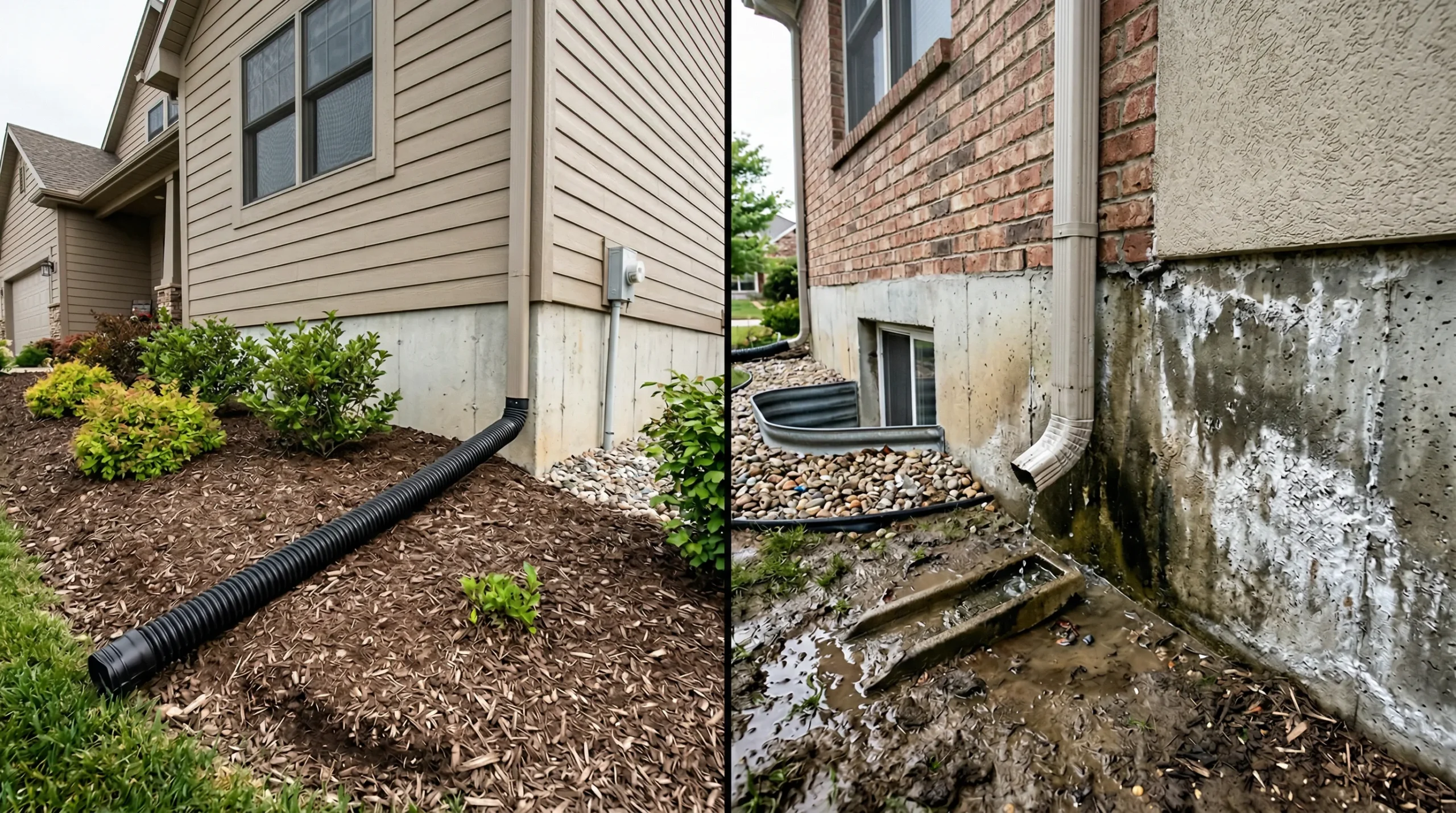
Every spring, homeowners across Southwestern Ontario open their basements to the same unwelcome surprise: water seeping in along the foundation wall. The culprit is rarely a mystery once you step outside and look up. Clogged, sagging, or undersized eavestroughs have been silently failing all winter, and the first heavy thaw finally exposes the problem. By the time you notice the damage, water has already been working against your home for months.
Eavestroughs are one of those components that rarely get attention until something goes wrong. But in a climate like ours, protecting your home’s foundation, siding, soffit, and landscaping depends on a properly designed and maintained drainage system. At Town and Country Siding and Aluminum, we have been installing and servicing eavestroughs across Southwestern Ontario for over 40 years, and we understand exactly what this region demands.
Why Eavestroughs Matter More in Ontario Than You Might Think
Southern Ontario is not an easy place to be a home’s exterior. Winters deliver cycles of heavy snowfall followed by rapid thaws. Spring brings some of the heaviest rainfall of the year. Summers can be humid and stormy, and fall deposits thick layers of leaves from the region’s abundant mature tree canopy. Each season creates a different set of challenges for your drainage system.
Clay soil, which is common throughout much of the London, Brantford, and Woodstock areas, is especially unforgiving. Unlike sandy soil, clay does not drain well. When water pours off a roof without being channelled away from the foundation, it saturates the clay immediately around your home. That saturated soil expands, shifts, and eventually pushes against foundation walls. Over time, this hydrostatic pressure causes cracks, water infiltration, and in serious cases, structural settlement.
A properly sized and functioning eavestrough system does one essential thing: it takes water off your roof and moves it away from your foundation in a controlled way. When that system fails, the consequences stack up fast.
Common Eavestrough Problems We See in Southwestern Ontario
Spring Flooding From Overwhelmed Gutters
Consider a scenario we see regularly in older neighbourhoods throughout London and Brantford: a homeowner has standard 4-inch eavestroughs that were installed 25 years ago. They were fine for their era, but a mature oak now drops enough leaves each fall to completely pack the trough within a few weeks. Come March, when snow melts faster than the frozen ground can absorb it, those blocked gutters overflow directly at the foundation. The basement takes on water every single spring. The fix is not waterproofing the basement interior, it is addressing what is happening on the roof line.
Upgrading to a 5-inch or 6-inch seamless aluminum eavestrough, combined with quality gutter guards, eliminates this cycle. Our seamless eavestrough installations are formed on-site using a mobile roll-forming machine, which means there are no seams along the length of the run. Seams are where sectional gutters fail first, and eliminating them dramatically extends the lifespan of the system while reducing maintenance needs.
Ice Damming: A Winter Threat to Eavestroughs and Roofs
Ice damming is a particularly serious problem across Southwestern Ontario, especially in homes with inadequate attic insulation or complex roof lines. Here is what happens: heat escapes from the living space into the attic and warms the upper portion of the roof deck. Snow melts and runs down toward the eaves, where temperatures are colder. It refreezes at the eavestrough line, forming a dam. Subsequent snowmelt backs up behind the ice and can work its way under shingles, into the roof deck, and down into the wall cavity.
Eavestroughs that are too small or improperly pitched trap this water and accelerate ice formation. When ice builds up, it can tear eavestroughs completely away from the fascia board, bending hangers and pulling on the fascia itself. We often see this damage in Woodstock and Kitchener after a particularly rough February. Properly installed eavestroughs with correct pitch and high-quality fascia attachment can reduce the likelihood of damage, and addressing the underlying roofing and attic issues eliminates the root cause.
Overflow Damage to Siding and Windows
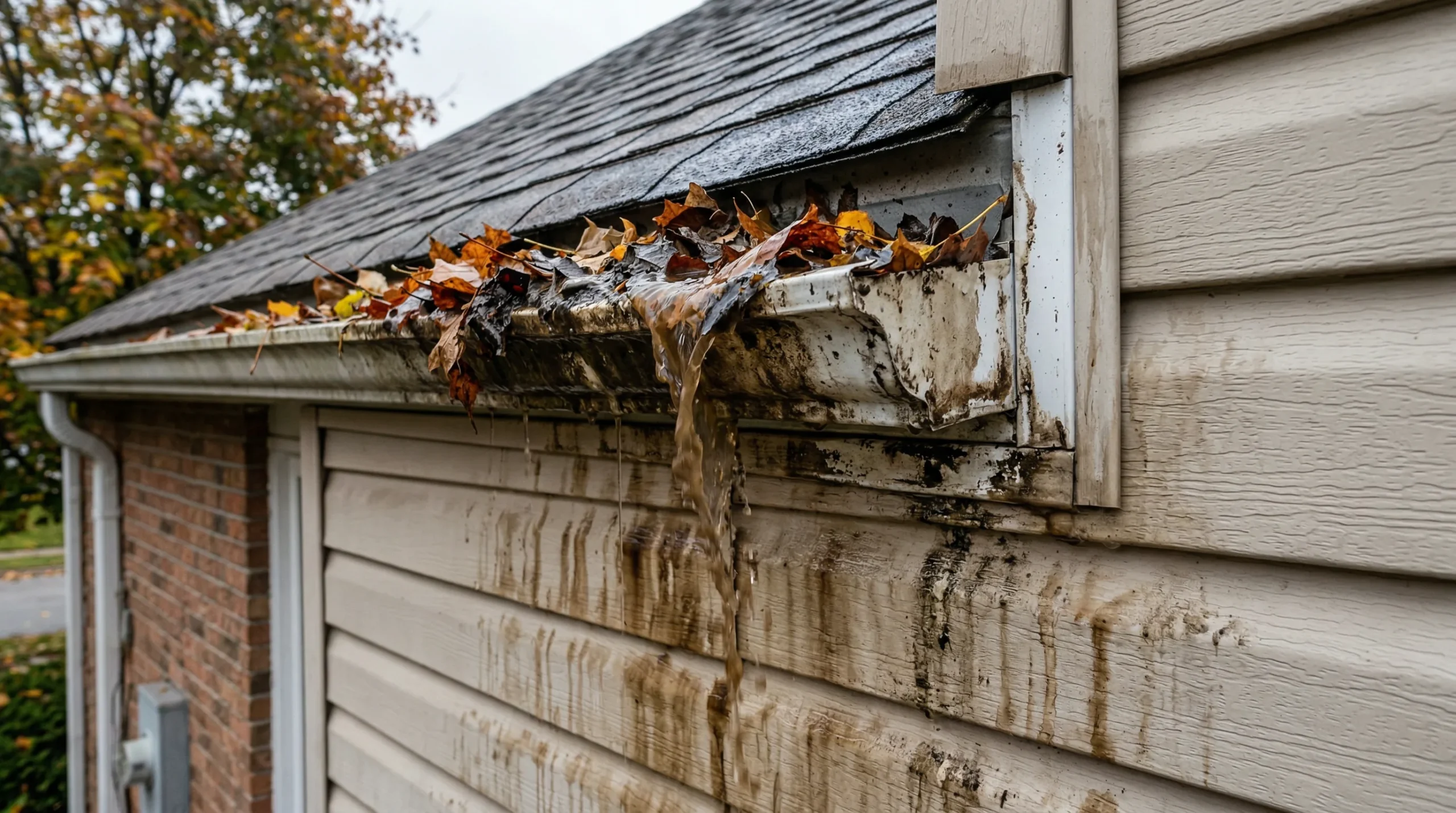
When an eavestrough is clogged or undersized, water does not just fall to the ground. It spills over the front edge and runs down the exterior wall. Over weeks and months, that water saturates the fascia board behind the eavestrough, works behind the soffit panels, and begins staining or deteriorating the siding below. Wood-trimmed windows are particularly vulnerable. Persistent moisture leads to rot, paint failure, and eventually water entry into the wall assembly.
This is why we always consider eavestroughs as part of the full exterior system. If we are replacing eavestroughs on a home that also has older siding or deteriorating soffit and fascia, we discuss the whole picture with the homeowner. Replacing just the eavestroughs on compromised fascia is a short-term solution. You can read more about the role soffit and fascia play in protecting your exterior in our post on the true value of soffit and fascia for your home’s protection.
What Good Eavestrough Installation Actually Involves
There is more to a quality eavestrough installation than buying the right material. Proper installation requires attention to slope, downspout placement, downspout sizing, and extension routing. Every section of eavestrough must be pitched correctly toward the downspout so that water drains rather than pools. Downspouts need to be sized appropriately for the roof area they serve, and they must terminate far enough from the foundation to protect against saturation.
Our eavestrough service includes a proper assessment of roof area, typical rainfall intensity for the region, and the configuration of your home’s exterior before we recommend a profile. For most homes in our service area, a 5-inch aluminum eavestrough is the standard recommendation. For homes with large roof planes, steep pitches, or heavy tree cover, a 6-inch profile is often the better choice. Combined with properly sized round or rectangular downspouts and gutter guards, the system is designed to handle what Ontario weather actually delivers, not just what a building code minimum requires.
The Role of Eavestrough Maintenance
Seasonal Cleaning
Even the best eavestroughs require periodic maintenance. In Southwestern Ontario, the fall leaf drop is the single biggest maintenance event of the year. Maple, oak, and walnut trees in older neighbourhoods throughout Norfolk County, Paris, and Simcoe can fill a 30-foot eavestrough run in a single windy afternoon. A cleaning in late November, after the leaves have fully fallen, and a second check in early spring before the heavy rain season are the minimum for most homes. Homes under significant tree cover benefit from gutter guards, which block debris while allowing water through freely.
Signs Your Eavestroughs Need Attention
Beyond visible blockages, watch for these indicators: water marks on your siding directly below the eavestrough, peeling paint on your fascia board, erosion channels in the soil at the drip line, and in winter, unusually heavy icicle formation along the eavestrough run. If your downspouts are not discharging freely during a rainfall, something is blocking the system. Address these signs early and the repair is usually simple. Ignore them through another Ontario winter and the damage compounds quickly.
Connecting Eavestroughs to Your Full Exterior Investment
Eavestroughs are the final piece in a complete exterior system that includes your roof, soffit, fascia, and siding. When all of these components are functioning correctly and working together, your home’s envelope stays dry, your foundation stays stable, and your exterior materials last for decades. When one component fails, it tends to stress the others.
Homeowners who have invested in quality professional siding services or new roofing deserve an eavestrough system that matches that level of quality. Pairing new siding with old, failing eavestroughs means moisture is still working against your investment every time it rains. Our team approaches exterior renovation as a whole-home discipline, and we offer the full range of exterior renovation services to handle every component under one roof.
Get a Free Estimate From Southwestern Ontario’s Eavestrough Experts
Town and Country Siding and Aluminum has been protecting homes across Southwestern Ontario for over 40 years. Our seamless aluminum eavestroughs are formed on-site, fitted to your exact home dimensions, and installed by experienced crews who understand the specific demands of Ontario’s climate. Whether you are dealing with a spring flooding problem, ice damming damage, or simply aging gutters that have reached the end of their life, we are ready to help.
We serve homeowners throughout London, Brantford, Woodstock, Kitchener, and communities throughout the region. Contact us today for your free estimate, and visit our photo gallery to see examples of our completed eavestrough and exterior renovation work. Call us at (226) 232-8802, or submit a request online and we will follow up within one business day.