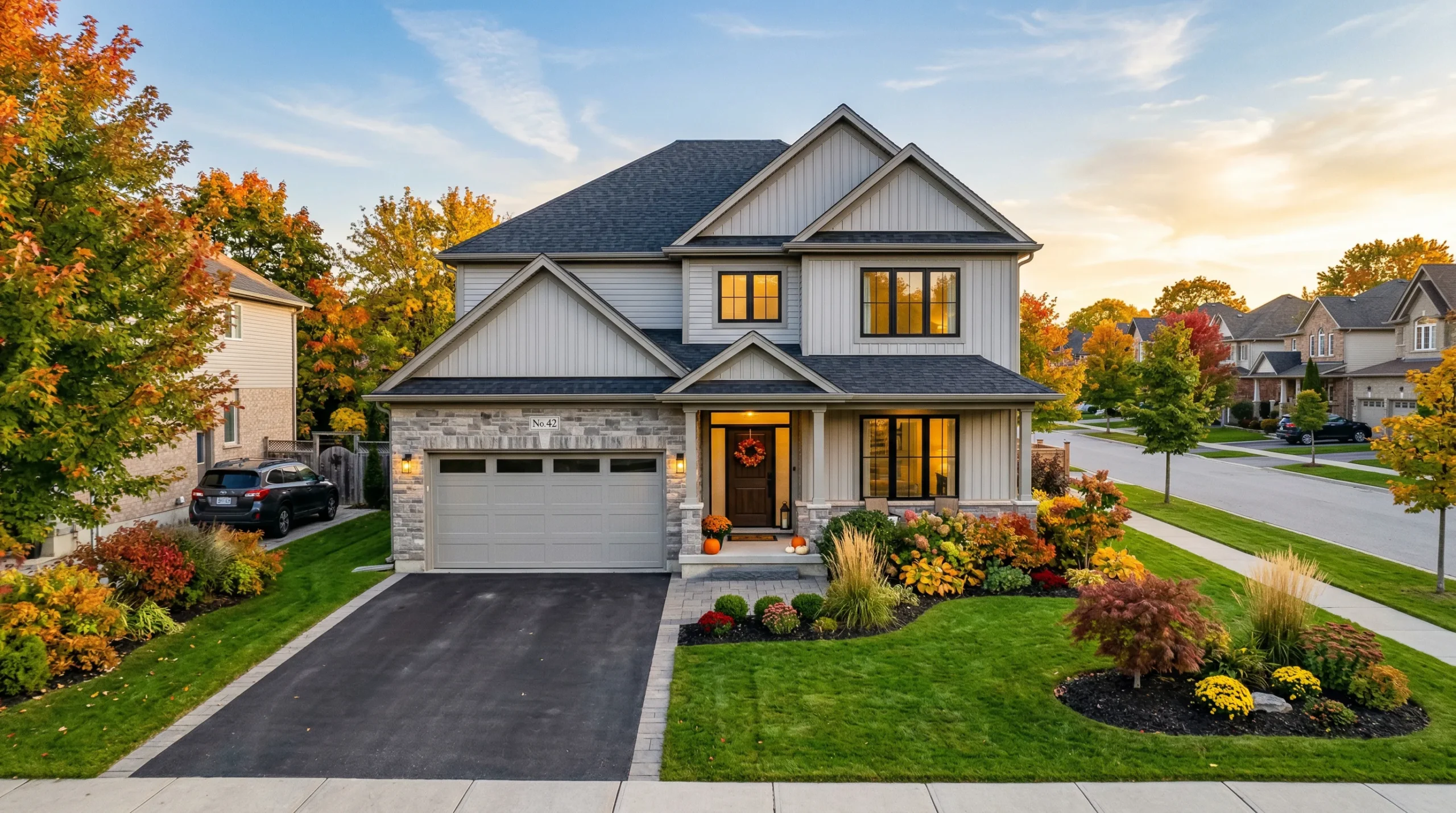
Drive through almost any neighbourhood in Southern Ontario today and you’ll see the same story on repeat: older homes wrapped in aging aluminum, newer exteriors finished in clean, low-maintenance vinyl siding. What looks like a simple style preference is actually the result of decades of evolution in building materials, manufacturing, and homeowner expectations.
The Aluminum Era: Post-War Innovation on Canadian Streets
Aluminum siding really took off in North America after the Second World War, when wartime aluminum production shifted from military use to consumer products. Between the 1940s and the 1970s, it became one of the most common cladding materials on suburban homes, prized for being lightweight, non-combustible, and far more rot-resistant than traditional wood.
For builders and homeowners, aluminum answered a pressing need: a faster, more affordable way to finish the huge wave of post-war houses without the constant repainting and repairs wood required. It could be formed to mimic wood clapboard, held paint reasonably well, and stood up better to moisture and insects. In Ontario’s climate, where freeze–thaw cycles relentlessly punish exterior finishes, that was a compelling upgrade.
Vinyl Arrives as a Challenger
Vinyl siding entered the exterior market in the late 1950s, first produced specifically as a replacement for aluminum siding. Early formulations used a simple mono-extrusion process and manually blended colours, which made the material more prone to fading, warping, and cracking than what we see today.
Initially, vinyl was a budget alternative, not the default choice. It offered low maintenance and good moisture resistance, but manufacturers were still learning how to control expansion, UV degradation, and colour stability. Through the 1960s and early 1970s, adoption was modest as aluminum remained the established standard on many Canadian homes.
How Vinyl Overtook Aluminum
The turning point came in the 1970s and 1980s, when advances in manufacturing dramatically improved vinyl’s performance. Co-extrusion technology allowed producers to create siding with two distinct PVC layers: an impact-resistant core and a UV-protected capstock. This made panels stronger, more colour-stable, and far less prone to the chalking and fading that had plagued early versions.
By the 1980s, vinyl siding had surged to become one of the most common residential cladding options, steadily replacing both aluminum and wood on new builds and renovation projects. Homeowners were drawn to its lower cost, wide range of colours and textures, and the fact that it never needed repainting, advantages that aligned perfectly with rising expectations for low-maintenance living.
Aluminum vs. Vinyl: How the Materials Really Compare
Durability & Weather Performance
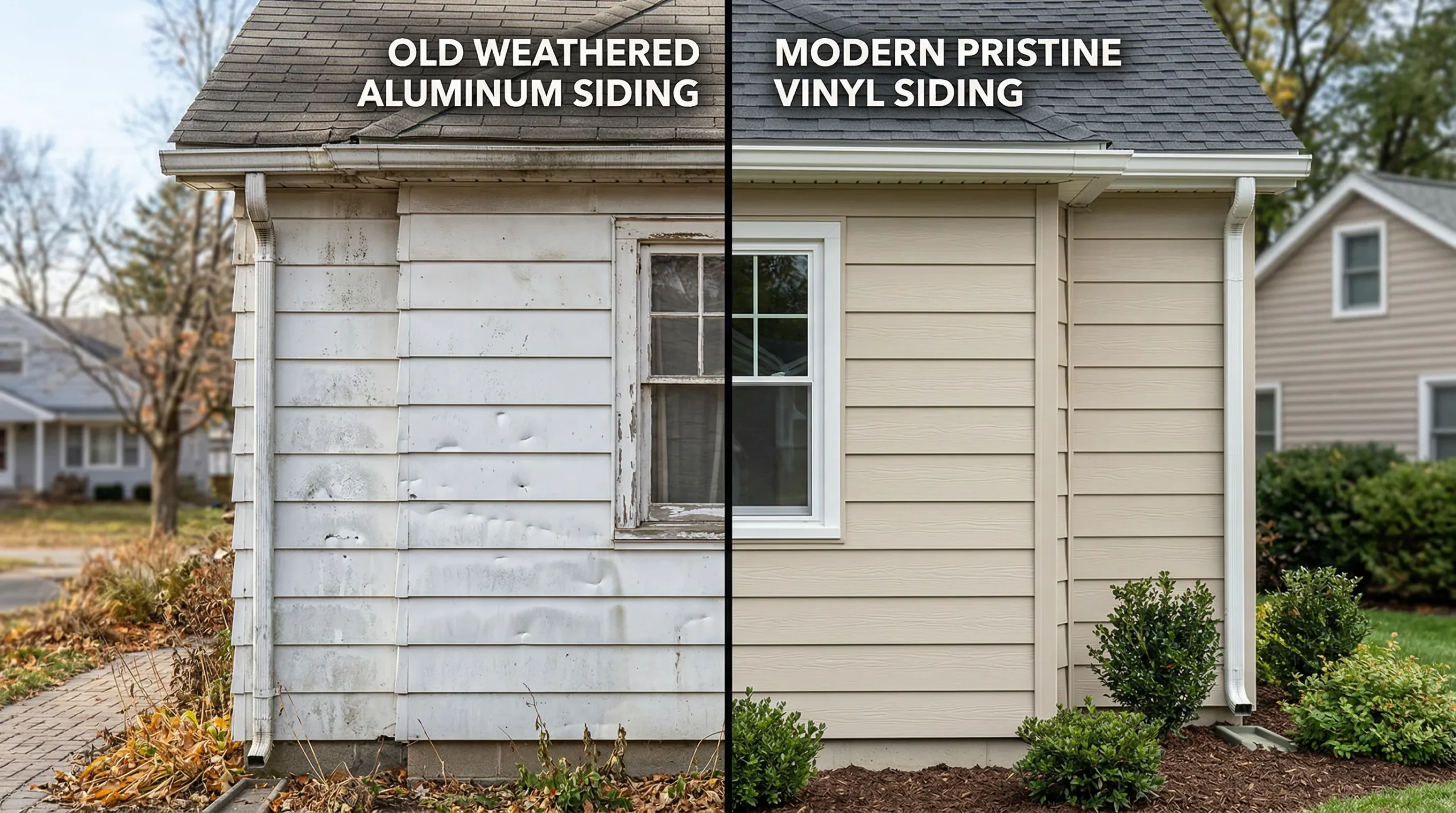
Both aluminum and vinyl siding can last for decades when properly installed, but they behave very differently under real-world conditions. Aluminum is a strong metal that handles heat and fire well and is naturally resistant to insects and rot. However, it dents relatively easily, from hail, ladders, or even an errant hockey ball, and once those dents are in, they’re difficult to disguise. Over time, painted finishes can chalk, fade, or peel, requiring periodic repainting.
Modern vinyl siding, by contrast, is engineered for impact resistance and flexibility, allowing it to absorb minor bumps without permanent damage. It won’t rust or corrode, and today’s formulations include UV additives that help prevent fading and brittleness in harsh sun. In climates like Southwestern Ontario, where homes see driving rain, snow, and repeated freeze–thaw cycles, quality vinyl siding has proven capable of delivering long-lasting protection with minimal upkeep.
Energy Efficiency & Comfort
On its own, bare aluminum is a good conductor of heat, which means it can transfer outdoor temperatures through to the wall assembly unless extra insulation is added behind it. That’s why older aluminum-clad homes often rely on separate rigid foam or upgraded interior insulation to improve comfort and energy performance.
Vinyl siding, especially insulated profiles with foam backing, offers a built-in boost to the wall’s thermal performance. The foam layer helps cut down on thermal bridging and air leakage, supporting more stable indoor temperatures and reducing drafts. While it’s not a replacement for proper wall insulation, it’s a meaningful upgrade in energy efficiency, an important consideration in regions with hot summers and cold winters like London and Brantford.
Maintenance & Long-Term Costs
Homeowners who have lived with aluminum siding know that its low-maintenance reputation comes with an asterisk. The panels themselves resist rot and insects, but the painted finish can oxidize and chalk, leaving a residue on hands and clothing and dulling curb appeal. Restoring that finish typically means washing, spot-repairing dents, scraping loose paint, priming, and repainting, projects that add up in both time and cost over the life of the siding.
Vinyl siding eliminates painting altogether. It’s colour-through, so the hue runs through the material rather than sitting only on the surface. For most households, maintenance is limited to occasional cleaning with a garden hose or soft brush to remove dust and organic growth. When you factor in the savings on paint, labour, and repairs, vinyl often delivers a lower total cost of ownership compared with aluminum, even if the initial material prices are similar.
Design, Noise, and Everyday Living
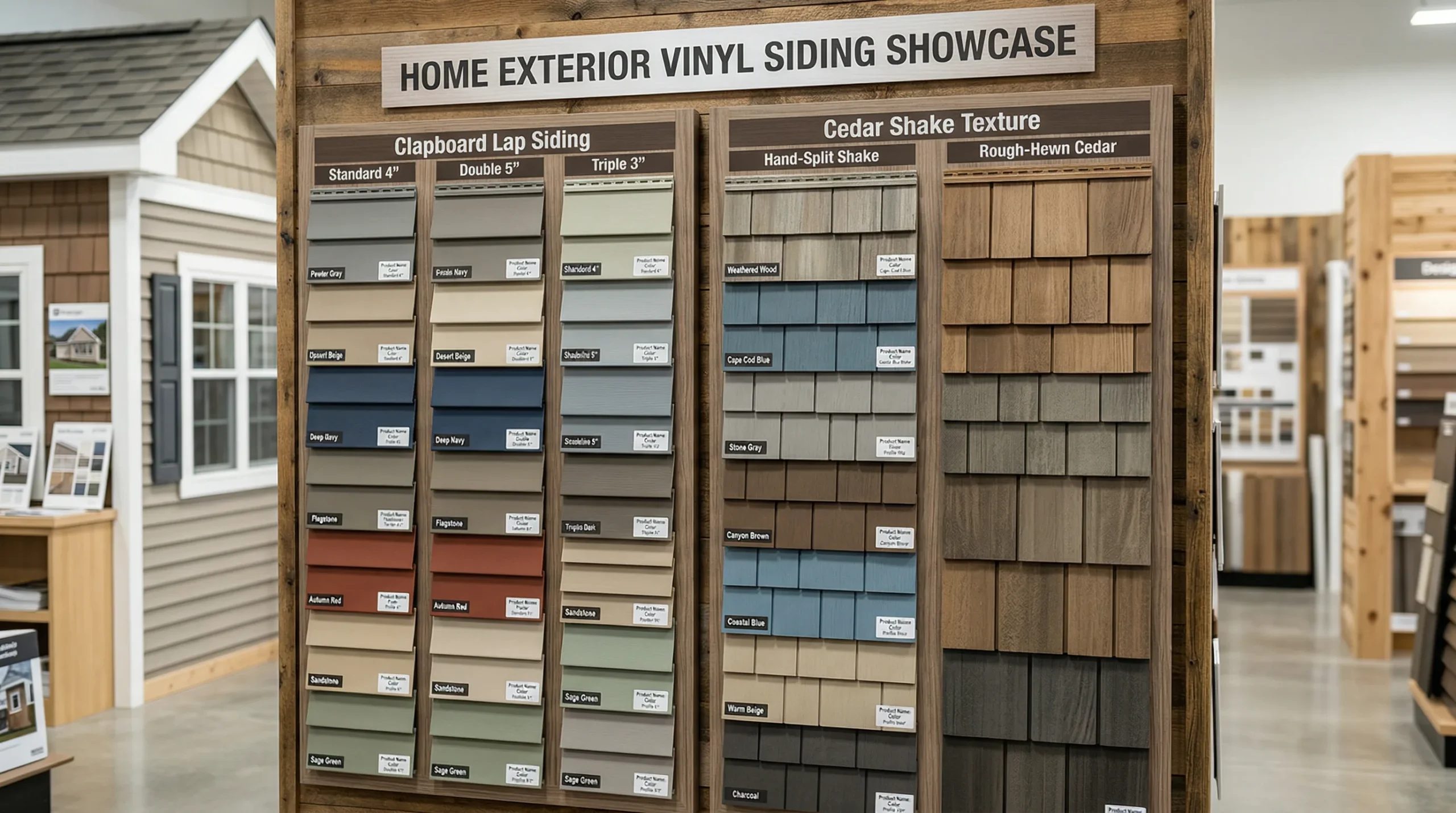
From a design standpoint, aluminum siding tends to offer fewer profiles and finishes, and it can take on a more utilitarian or “flat” look once chalking sets in. Vinyl, on the other hand, is available in a wide range of colours, profiles, and textures, from classic clapboard to shakes that mimic cedar, making it easier to match different architectural styles and neighbourhood aesthetics.
Noise is another subtle but important factor. In heavy rain or hail, uninsulated aluminum siding can amplify sound, making storms more noticeable inside the home. Vinyl, particularly when paired with foam backing, helps absorb and dampen exterior noise, contributing to a quieter, more comfortable interior environment.
Why Vinyl Has Become the Go-To Choice for Modern Homeowners
When you look at the full picture, durability, energy efficiency, maintenance, aesthetics, and overall cost, it’s not hard to see why vinyl siding has become North America’s dominant cladding material. It delivers the low-maintenance promise aluminum was known for, but with better insulation potential, improved impact resistance, and a broader palette of design options.
In markets like Southern Ontario, local siding specialists now frequently recommend high-quality vinyl as the default option for most homeowners, with aluminum reserved for specific applications such as soffit, fascia, and custom capping. That mix lets you take advantage of aluminum’s strengths where it excels, while relying on vinyl as the primary protective shell around the home.
What This Means for Your Home
If your property still wears its original aluminum siding, the story playing out across today’s neighbourhoods is a useful guide. Upgrading to modern vinyl siding can refresh tired exteriors, improve energy performance, and reduce the time you spend worrying about dents, peeling paint, or fading. And when that vinyl is installed by an experienced exterior contractor who understands Southwestern Ontario’s weather patterns, you’re not just changing how your home looks, you’re investing in how it performs for decades.
For homeowners considering their next exterior project, the evolution from aluminum to vinyl isn’t just an industry trend; it’s a roadmap to better protection, lower maintenance, and lasting curb appeal.
Get a Free Siding Quote in Southern Ontario
Town & Country Siding & Aluminum has been helping homeowners across Southwestern Ontario upgrade their exteriors for over 40 years. Whether you’re replacing old aluminum siding or choosing a new look for your home, our team is here to help. Contact us today for a free, no-obligation estimate and see how modern vinyl siding can transform your home. We proudly serve London, Brantford, Woodstock, Kitchener, Norfolk County, and surrounding communities. Browse our photo gallery to see examples of our work.