Most homeowners pay close attention to their siding, windows, and roof, but soffit and fascia tend to get overlooked until something goes wrong. If you have ever climbed a ladder to clean your eavestroughs and noticed the fascia board pulling away or soft to the touch, you already know how quickly that situation can escalate. In Southwestern Ontario, where winters are harsh, freeze-thaw cycles are relentless, and summer humidity can push moisture deep into wall cavities, soffit and fascia do some of the hardest work on your home’s exterior. At Town & Country Siding & Aluminum, we have been replacing and installing soffit and fascia across the region for over 40 years, and we can tell you with confidence: these components matter far more than most people realize.
What Soffit and Fascia Actually Do
The fascia is the vertical board that runs along the lower edge of your roofline, capping off the ends of the rafters. It is the surface your eavestroughs attach to, which means it absorbs a significant amount of weight and stress throughout the year — especially when those troughs are loaded with ice or standing water. The soffit is the horizontal surface tucked underneath the roof overhang, bridging the gap between the fascia and the exterior wall. Together, they form a system that seals the underside of your roofline from weather, pests, and moisture infiltration.
When both components are in good shape, your attic can breathe properly, your eavestroughs stay firmly in place, and the structural ends of your rafters are protected from the elements. When they fail — and in Ontario’s climate, they do fail — the consequences can ripple outward quickly, affecting your attic insulation, your roofing system, and even your interior ceilings.
Why Ontario’s Climate Is Hard on Soffit and Fascia
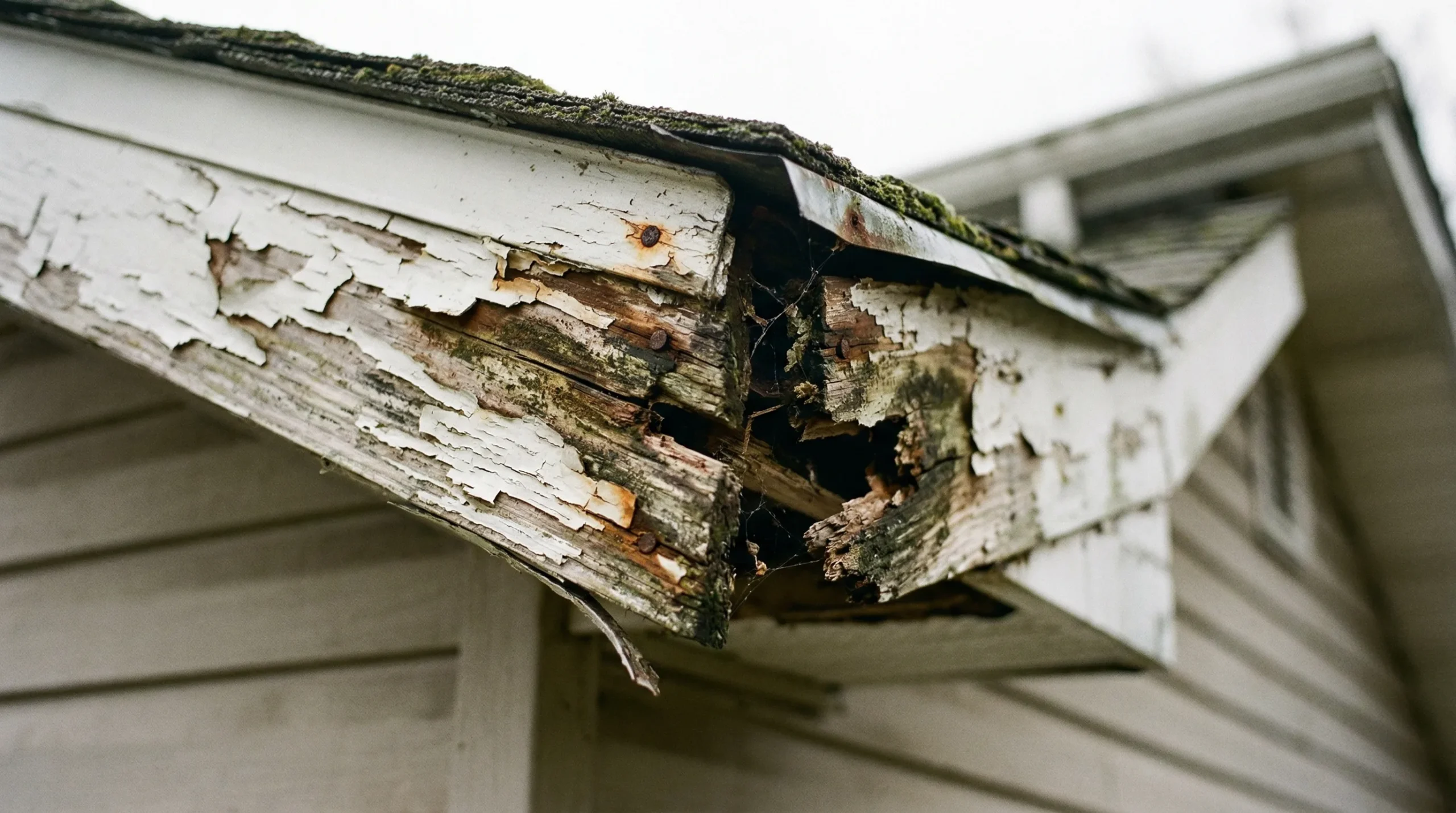
Homeowners in London, Brantford, Woodstock, and across Southwestern Ontario deal with a climate that is genuinely punishing for exterior materials. The freeze-thaw cycle is one of the biggest culprits. Water gets into small gaps around the fascia or soffit, freezes overnight, expands, and widens those gaps just enough to let in more water the next time. Repeat that process dozens of times between November and March, and you end up with materials that are cracked, warped, or completely separated from the structure.
Ice Dams and Fascia Damage
Ice dams form when heat escapes from a poorly ventilated attic and melts snow on the roof. The water runs down to the colder eaves, refreezes, and creates a ridge of ice that traps more meltwater behind it. That standing water has nowhere to go except under your shingles — or along the fascia. Wooden fascia boards in this situation absorb moisture rapidly, swell, and begin to rot from the inside out. Many homeowners in the region don’t realize the fascia is compromised until their eavestroughs start pulling away from the house. By that point, the rotting has often been happening for a season or more.
Pest Entry Through Damaged Soffit
Raccoons, squirrels, and starlings are opportunistic. A soffit panel that has warped away from the fascia, or one with a small hole from weather damage, is a perfectly-sized entry point into your attic. We regularly hear from homeowners in London and Brantford who discovered a family of squirrels in their attic after a winter of damage — and the entry point was a small gap in the soffit that went unnoticed for years. Once animals get in, they tear up insulation, leave waste, and can cause electrical hazards by chewing on wiring. Replacing the soffit and fascia properly, with fitted aluminum panels, eliminates these entry points entirely.
Summer Humidity and Attic Mould
Ontario summers bring high humidity levels that can push warm, moisture-laden air into the attic if the soffit ventilation is not functioning correctly. Vented soffit panels allow fresh outside air to flow in along the underside of the roofline, creating the airflow needed to carry that moisture back out through the ridge vents at the roof peak. Without adequate venting — whether because the soffit is solid, blocked by insulation, or missing panels — attic moisture levels rise, and mould follows. A homeowner in Woodstock recently came to us after a home inspection flagged mould growth in the attic. The cause was non-vented soffit that had been installed without considering airflow. Replacing it with properly spaced vented aluminum soffit solved the ventilation problem and helped them pass the inspection.
Materials Town & Country Uses for Soffit and Fascia
We install soffit and fascia using high-quality aluminum and vinyl products, the same Canadian-made Gentek materials we use across all of our exterior work. Each material has its place depending on the home’s existing exterior and the homeowner’s priorities.
Aluminum Soffit — Vented and Non-Vented
Aluminum soffit is our most commonly installed option. It is durable, maintenance-free, and does not rot, warp, or attract insects. We install both vented and non-vented aluminum soffit panels depending on the area of the overhang and the home’s ventilation requirements. Vented panels are typically used throughout the majority of the overhang to promote airflow, while non-vented panels may be used in specific corner or transition areas. The perforations in vented aluminum soffit allow air to circulate continuously, which is critical for attic health year-round.
Aluminum Fascia
Aluminum fascia wraps over the existing fascia board, providing a clean, finished look while permanently protecting the wood underneath from moisture. It comes in a range of colours to coordinate with your siding choice, and unlike painted wood, it never needs repainting or caulking. Because your eavestroughs mount directly to the fascia, having a solid aluminum surface there means the eavestrough system stays secure and better protected against ice loading.
Vinyl Soffit
For homeowners with vinyl siding systems, matching vinyl soffit is available and gives the home a cohesive, uniform appearance under the eaves. Vinyl soffit handles temperature fluctuation well and is a cost-effective solution that still delivers the moisture and pest protection you need.
How Soffit and Fascia Connect to the Rest of Your Exterior
Soffit and fascia don’t exist in isolation — they are part of an interconnected exterior system. The fascia board supports the eavestroughs, which carry water away from your foundation. If the fascia fails, your eavestroughs will pull away or slope incorrectly, sending water toward your foundation walls instead of away from them. You can read more about why this matters in our article on the importance of good eavestroughs for protecting your home.
At the same time, the soffit connects directly to your siding at the wall. A clean, well-fitted soffit installation makes the transition between your siding and roofline look polished and professional. If you are already planning a siding replacement or have questions about the benefits of professional siding services, bundling that project with new soffit and fascia is a smart move. It saves mobilization time, ensures all exterior components match, and eliminates the risk of installing new siding next to failing fascia that you will need to replace again in a year or two.
The roofline connection is equally important. The fascia board sits at the edge of your roofing system, and damage to the fascia can eventually affect the integrity of the roof deck itself. If you are dealing with roofing concerns alongside your fascia, a combined exterior assessment will give you the full picture of what is happening at the roofline.
Signs It Is Time to Replace Your Soffit and Fascia
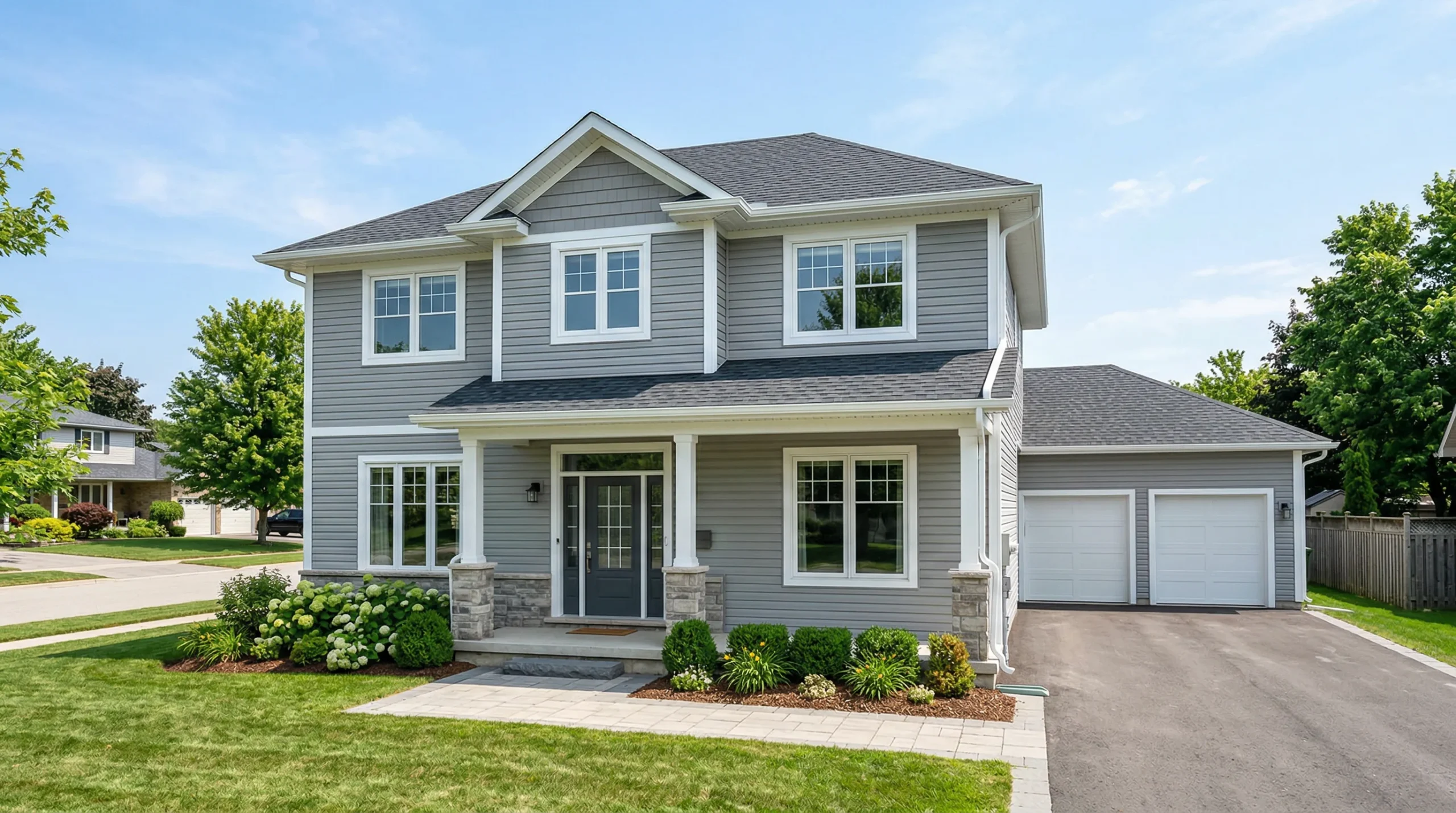
You don’t need to wait for a full failure before addressing soffit and fascia. Common warning signs include: visible peeling or flaking paint on fascia boards, soft or spongy wood when you press on the fascia, gaps or sagging between soffit panels and the wall, water stains inside the attic near the eaves, eavestroughs that are pulling away from the house, and evidence of animals entering around the roofline. Any one of these signs warrants a closer look. In most cases, replacing the soffit and fascia at that point is more cost-effective than waiting until structural rafter ends or roof decking become involved.
We serve homeowners throughout Kitchener, Norfolk County, Paris, Simcoe, and communities across Southwestern Ontario. If you are noticing any of these warning signs, we are happy to take a look and give you an honest assessment.
Get a Free Estimate from Town & Country
Soffit and fascia work best when it is done right the first time — properly fitted, correctly vented, and matched to the rest of your exterior. Town & Country Siding & Aluminum has been completing soffit and fascia installations across Southwestern Ontario for over 40 years, and our team brings the same level of care to a soffit replacement as to a full exterior renovation.
If you are ready to protect your roofline, improve your attic ventilation, and give your home’s exterior a clean, finished look, we would love to help. Contact us today for a free estimate — there is no obligation, and we will give you a clear picture of what your home needs. You can also browse our photo gallery to see examples of our soffit, fascia, and full exterior work across the region.
We serve homeowners in London, Brantford, Woodstock, Kitchener, Norfolk County, Paris, Simcoe, and throughout Southwestern Ontario. Call us at (226) 232-8802 or reach out online to get started.